More Than Concrete: Building the Infrastructure of Belonging

Updated: Apr 16
A Note from Our Executive Director
One of the most valuable forms of infrastructure is not something we can see or measure. It is not concrete or paved, yet it shapes the way our lives unfold. It is the connections we have with each other, the trust, the sense of belonging, and the shared moments that make a community feel alive. Without it, even the busiest, most efficient cities can feel hollow.
We live in a world fueled by technology. Its benefits are undeniable, yet it also carries a cost, including more loneliness, isolation, and disconnection. In Canada, millions of adults, particularly those over 50, experience persistent isolation. Connection is part of being human, and this is where face to face, creative, relational spaces matter most.
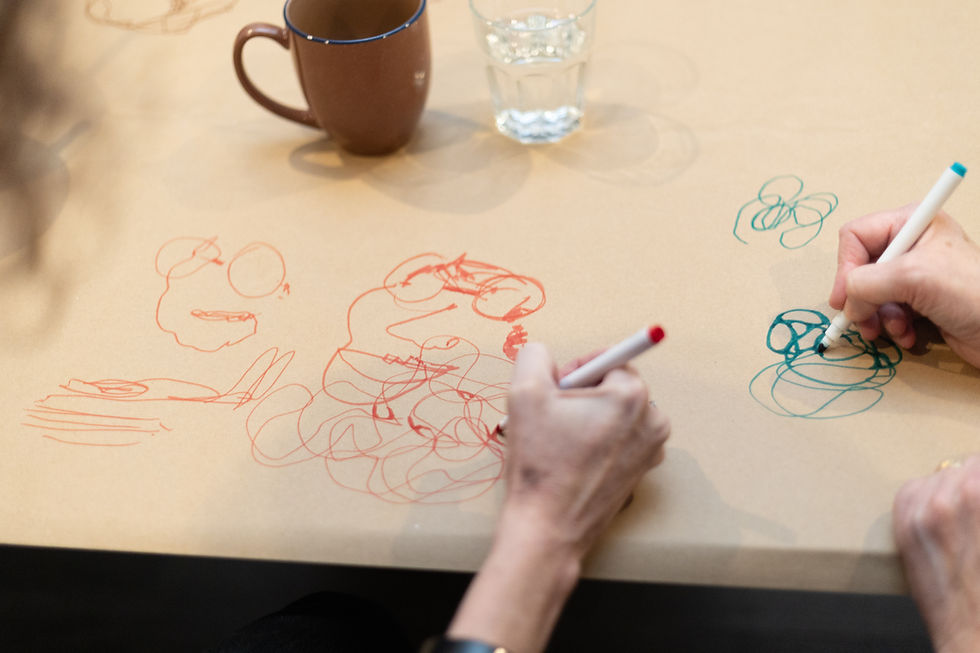
My journey in building this connection started with Sparkles n’ Sawdust Studio. It was a small, brick-and-mortar boutique located on Argyle Street in downtown Halifax (Kjipuktuk). As a small business with a big heart, I founded the studio to support artists with disabilities and underrepresented creatives. During the pandemic, I pivoted and transformed the space into a creative event studio, and it ultimately became a lifeline for many. I watched people arrive quiet and hesitant, only to leave hours later sharing laughter and stories they hadn't spoken aloud in months. That little space proved that when you give people a place to create, you give them a place to belong.
As the world began to open back up, it felt natural to take these lessons and reach further. I began organizing large scale community arts and culture events, using public speaking and advocacy to champion the importance of inclusive spaces. This work grew into consultancy, helping organizations understand how to build more equitable and accessible communities. These experiences, from the quiet moments in my small studio to the energy of large community festivals, eventually led to the creation of the Creative Community Impact Association.
Today, we are a federally incorporated nonprofit with a national focus. We have taken the heart of that first studio and the advocacy work that followed to create an organization dedicated to research, education, and partnerships. We are here to prove what I saw in that first space, that art is the bridge, but connection is the destination.
In a world that often feels divided and lonely, creativity and connection matter more than ever. We believe no one should have to navigate life without a creative support system. If you believe in this mission, there are three ways you can help us grow
Your donations keep our programs free and accessible for everyone, ensuring that cost is never a barrier to connection. We also offer mission driven workshops for workplaces to help teams build genuine bonds through creativity. Finally, we are always looking for partners and collaborators who share our vision. If you are ready to help us build a more connected community, let’s start a conversation.
Thank you for being part of this journey from a small business in Halifax (Kjipuktuk) to a movement for community wellbeing. Together, we are creating a world that feels a little fuller, a little warmer, and a lot more human.